
BB Desk
Mumbai’s real estate sector could face fresh challenges after the Brihanmumbai Municipal Corporation (BMC) suspended water supply to construction sites and enforced a 20% reduction in water allocation for commercial and industrial users amid a worsening water shortage.
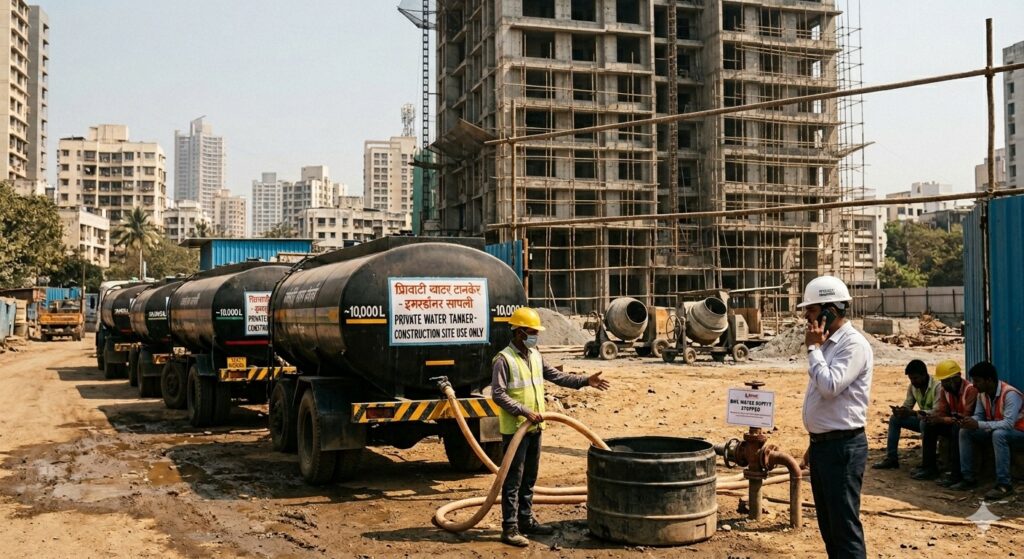
With water reserves across Mumbai’s seven lakes dropping to just 10.35% of total capacity, developers have expressed concerns that prolonged restrictions may affect construction timelines, escalate project costs, and delay project handovers. Industry stakeholders are calling on government authorities to facilitate alternative water sources and introduce supportive measures to ensure minimal disruption to ongoing developments across Mumbai and the Mumbai Metropolitan Region (MMR).
Speaking on the issue, NAREDCO Maharashtra President and Srishti Group Co-Founder and Managing Director Kamlesh Thakur said, “The BMC’s decision to suspend water supply to construction sites reflects the seriousness of the current water shortage and the need to prioritize drinking water requirements of citizens. At the same time, the restrictions will inevitably have implications for the real estate sector. Construction activities such as concreting, curing, plastering, and finishing works are dependent on a reliable water supply. Any prolonged disruption could impact project schedules, increase construction costs, affect labour productivity, and delay the delivery of homes and infrastructure projects.”
He further added, “The current situation also highlights the urgent need to accelerate the development of a robust treated-water ecosystem for construction and other non-potable uses. Greater availability of treated wastewater, expanded recycling infrastructure, and dedicated distribution networks can significantly reduce dependence on freshwater resources while ensuring continuity of development activities during periods of water stress. The industry would welcome support from the government and civic authorities in facilitating access to treated water, streamlining approvals for alternative water sources, ensuring adequate tanker availability at reasonable rates, and considering suitable relief on project timelines where projects are demonstrably impacted by the water shortage.”
Underlining how the shortage may increase dependence on private water procurement, Superb Realty Managing Director Shilpin Tater noted, “The suspension of water supply to construction sites comes at a time when the real estate sector is witnessing strong momentum across Mumbai and the MMR region. Water is a critical input for several stages of construction, and any disruption can slow project execution and affect labour productivity. The additional costs associated with sourcing water through tankers and alternative channels could place significant pressure on project budgets.”
Stressing on the necessity to adopt sustainable practices, Ariha Group Promoter Dhruman Shah stated, “For the real estate sector the immediate concern is the impact on construction schedules, particularly for projects in critical execution stages where uninterrupted water availability is essential. Prolonged restrictions could create cascading effects across the project lifecycle, from construction progress to possession timelines and customer commitments. This situation demands acceleration in adoption of sustainable practices such as on-site water recycling, rainwater harvesting, and the use of treated wastewater for construction.”
Agreeing with Shah, Transcon Developers Director Shraddha Kedia Agarwal further added, “The current restrictions are likely to affect project planning, resource allocation, and execution schedules. Beyond the immediate impact on timelines, developers will also have to manage higher operational costs arising from alternative water sourcing arrangements. Going forward, this situation should serve as a catalyst for greater integration of sustainable water management systems across developments, including treated water usage, greywater recycling and enhanced rainwater harvesting infrastructure.”
