
BB Desk
Mumbai’s streets turned into powerful spaces of resistance on Wednesday as simultaneous protests unfolded across Dadar, Chembur, and Powai drawing thousands of students, young professionals, activists and citizens. While the demonstrations were rooted in demands for accountability and justice, what stood out was the unmistakable Gen Z stamp on the movement – creative, visual and unapologetically expressive.
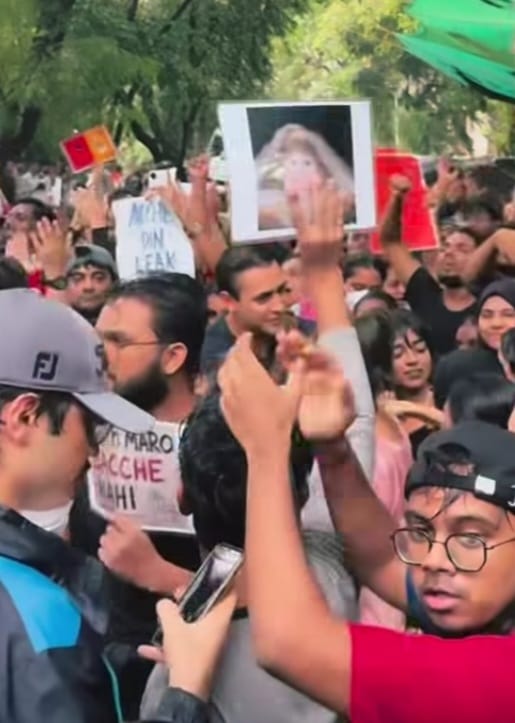
At Shivaji Park in Dadar, the protest became a convergence of civic activism combined with popular culture. Actors Alaya F, Imran Khan, Jim Sarbh, Ayesha Khan, Pratibha Ranta, Gurfateh Pirzada joined the gathering alongside rapper Raftaar, lending their voices and visibility to the movement that has increasingly resonated with young Indians. Videos and photographs from the rain-soaked gathering quickly spread across social media, with Imran Khan seen walking among protesters while Ayesha Khan was later reportedly detained by police during the demonstration.
Yet, beyond the celebrity attendance, it was the witty posters that stole much of the spotlight. These Posters not just made you pause, laugh, or think but also reflected a generation that’s extremely fluent in the social media language and makes good use of humour, irony, satire, and design as tools of the protest.
Cardboards were transformed into canvases, creating signs that blended memes with razor sharp political messaging. They carried pop culture references, viral catchphrases, handwritten doodles, internet slang and witty one-liners tailor-made for Instagram stories. Every poster felt like an extension of its creator: funny, angry, artistic, sarcastic or deeply emotional. Many were painted with bold colours, illustrated with cartoons and emojis, proving that this generation communicates as much through aesthetics as through words.
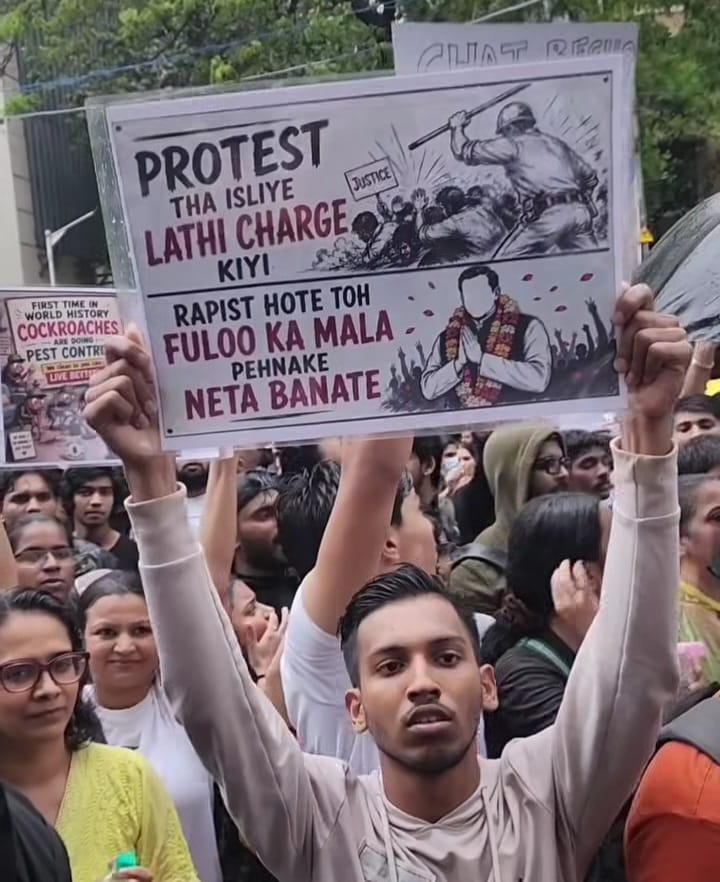
The creativity wasn’t accidental. Gen Z understands that in the age of algorithms, visuals travel faster than speeches. A clever placard can become a viral Instagram reel, a trending tweet or a widely shared meme within minutes, carrying the message far beyond the protest site. Activism didn’t stay limited to the streets, it unfolded simultaneously across digital platforms with the young protestors documenting minute-by-minute account of the protest in real time, livestreaming marches, creating reels, sharing pics that instantly gained attention.
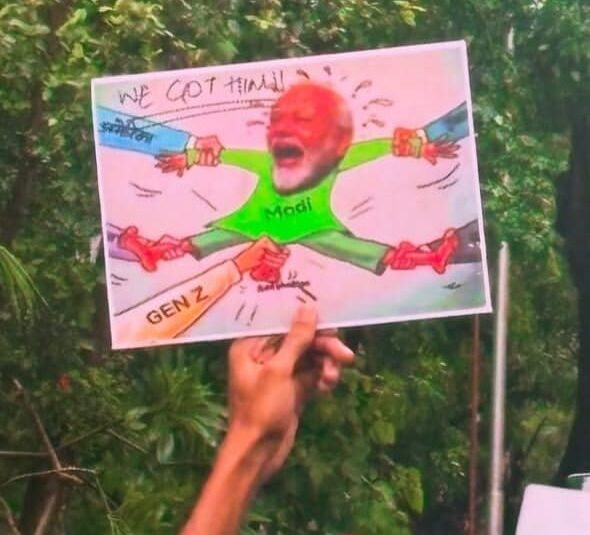
Even as Mumbai Police enforced prohibitory orders and detained hundreds of protesters across the city, the imagery from Dadar and Chembur dominated social media feeds. Rain-soaked crowds holding colourful posters, students laughing between chants while lifting signs above their heads, and strangers photographing each other’s artwork created a visual narrative that was impossible to ignore.
The protests reflected a shift in how young India expresses dissent. For Gen Z, a placard isn’t just something to hold – it’s a statement, a conversation starter and sometimes the most powerful expression that conveys what they think and feel. Despite heavy police presence and restrictions, the protesters assembled in large numbers underlining how quickly youth-led mobilisation can spread through social media and word of mouth.
The protests showcased a changing face of public demonstrations in Mumbai. Celebrity solidarity added visibility, but the defining image of the day remained the sea of young faces carrying inventive placards, chanting in the rain and proving that for their generation, it is as much about creative expression as it is about demanding change. The highlight was a young protestor identified as Rhiya Ahir, 27 who dared to stand in front of the police van during the dadar Protest demanding release of the other detained protestors.
(Image Source: bombay, mishra_sohit)
