
BB Desk
Redevelopment is emerging as a key driver of Mumbai’s next phase of urban growth, with the Western Suburbs positioned at the centre of the activity. Maharashtra Chief Minister Devendra Fadnavis’s recent comments on making Mumbai slum-free within the next decade through a cluster-based redevelopment model have further highlighted the government’s focus on large-scale urban renewal.
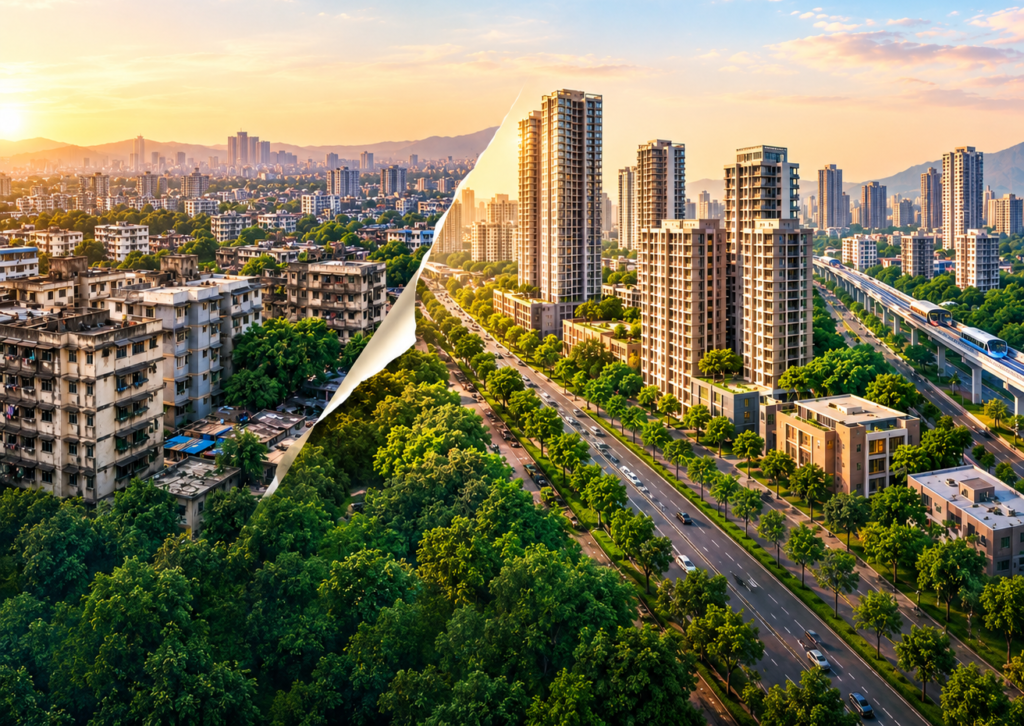
The Western Suburbs offer strong redevelopment potential, supported by ageing housing stock, established infrastructure, and sustained residential demand. According to Knight Frank India, 773 of the 1,094 redevelopment agreements signed across Mumbai between January 2020 and March 15, 2026, were in the Western Suburbs accounting for nearly 71% of the total and unlocking around 321.2 acres of land.
The broader market is witnessing a similar shift. A JLL-NAREDCO report found that redevelopment projects contributed 15% of Mumbai’s housing sales during 2025 and the first half of 2026, up from around 6% during 2016–21. More than 1,000 redevelopment projects have been launched since 2020, indicating the growing role of redevelopment in Mumbai’s housing supply.
“The Western Suburbs are at an important inflection point in their redevelopment journey. The scale of activity reflects the strong alignment between housing demand, land economics, and the need to modernise ageing residential stock. A cluster-based approach can take this further by bringing fragmented parcels together and enabling more integrated and efficient development,” said Arshad Lashkaria, CEO & Managing Director of Lashkaria Group.
The opportunity extends beyond individual housing societies to older MHADA layouts, ageing settlements and fragmented developments across the western corridor. Cluster redevelopment can facilitate larger-scale planning, improved infrastructure, better open spaces and modern amenities while optimising Mumbai’s limited land resources.
Neighbourhoods spanning Andheri, Jogeshwari, Malad, Kandivali, and Borivali are particularly well placed, given their established social infrastructure, connectivity, and consistent housing demand. However, scaling up redevelopment will require balancing the interests of existing residents, developers, and civic authorities.
An industry expert shared, “Redevelopment is increasingly becoming Mumbai’s principal mechanism for creating new housing within its existing urban footprint. The Western Suburbs have already established a strong lead, and the next phase will be about moving from individual projects towards broader neighbourhood-level transformation.”
The government’s emphasis on cluster redevelopment could therefore mark a shift from isolated reconstruction projects to more coordinated urban regeneration. With limited scope for outward expansion, Mumbai’s future growth will increasingly depend on how effectively its existing land and housing stock are renewed and the Western Suburbs are already emerging as a key focal point of that transformation.

