BB Desk
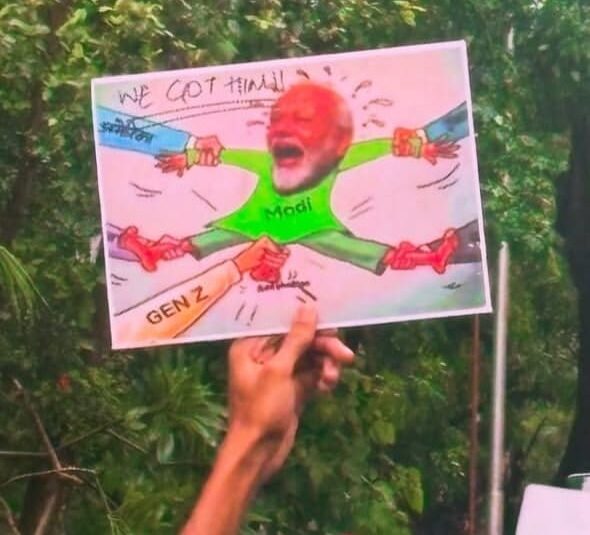
Today, Delhi witnessed a deeply disturbing confrontation between the power of state and the right of citizens to protest peacefully. A proposed demonstration at Jantar Mantar, organised by the Cockroach Janata Party (CJP) to demand Chief Election Commissioner Gyanesh Kumar’s resignation over alleged irregularities in electoral-roll revisions, was met with an extraordinary security operation that included heavy police deployment, barricades, restrictions on movement, and mass detentions of protestors, lawyers, activists, and policical leaders.
The question that must now be asked is simple: if citizens want to raise their voice about the electoral process, why has the response been such an extensive exercise in preventing them from assembling?
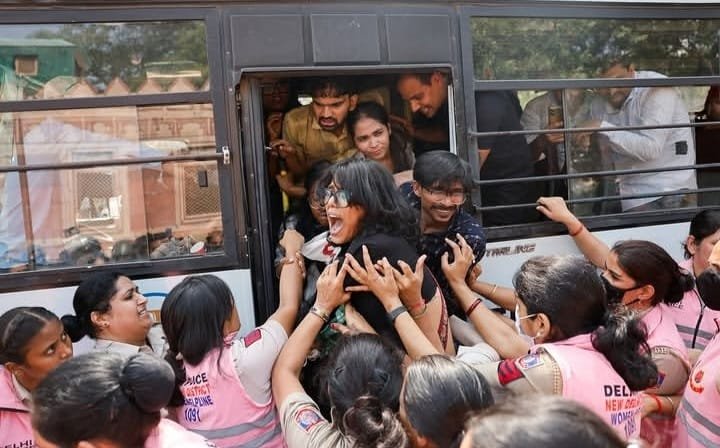
Protest stopped before it could begin
The crackdown was brutal and massive. Protestors were mercilessly dragged and forced into large detention buses. Even the bystanders were not spared. Around 7,000 protestors were reportedly detained during the wider crackdown. Many were intercepted well before reaching Jantar Mantar and taken away in police vehicles to stadiums or other temporary detention facilities. Among those detained were CJP founder Abhijeet Dipke, party leaders Saurav Das, Ashutosh Ranka, YouTuber Dhruv Rathee, opposition leaders and several activists. Reports also name CPI(M) leaders M. A. Baby/ John Brittas, Former Kerala Chief Minister Pinarayi Vijayan, AAP leaders Arvind Kejriwal/ Sanjay Singh, Trinamool Congress Leader Mamata Banerjee, AISA President Neha Bora, activists Yogendra Yadav and lawyer Prashant Bhushan among those detained by the Delhi police. Economist Jean Drèze, filmmaker Aban Raza, and other scholars were also detained during the operation.
This was not simply managing a crowd at a protest site. The operation extended to people travelling to Delhi, people walking on the streets, gathering at other locations, journalists reporting on ground, and political figures seeking to participate in the demonstration. When the state prevents a protest from taking place by detaining its organisers, intercepting its participants across multiple locations, and even general people not directly connected to the protest, it must explain why such extraordinary measures were necessary and proportionate.
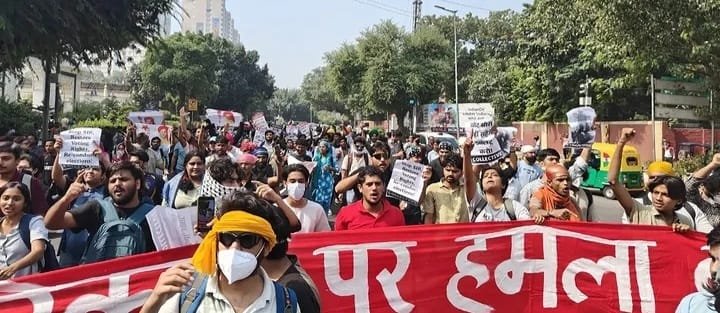
Why the citizens were protesting?
The protests arose from concerns over the Special Intensive Revision (SIR) of electoral rolls and allegations that eligible voters could be excluded. The Election Commission and BJP both have rejected accusations of partisan wrongdoing. These competing claims deserve transparent scrutiny and clear answers, not a situation in which the people raising questions find themselves detained before they can make their voices heard.
India’s Constitution protects freedom of expression and peaceful assembly, subject to lawful restrictions. These are not privileges granted at the government’s convenience; they are fundamental democratic freedoms. Denying permission for a protest does not automatically settle the legality of every subsequent detention.
The reported detention of CJP’s founder, opposition politicians, activists, and a prominent digital commentator makes this a matter of wider public concern. The authorities must clarify the legal grounds for these actions, disclose the whereabouts, and status of those detained, and investigate credible allegations of arbitrary detentions or mistreatment.
The larger issue goes beyond one political party or one demonstration. It concerns whether citizens can question those in power, scrutinise electoral processes, and demand accountability without being treated as a threat to public order.
Jantar Mantar has long symbolised the citizen’s right to be heard. When the response to a proposed protest is mass detention and barricades, the country deserves answers.
A confident democracy does not fear questions. It answers them. It does not establish public trust by silencing criticism, but by demonstrating transparency, fairness, and accountability.
The events of 10 October demand a serious examination of the police operation, the circumstances of individual detentions, and the electoral concerns that brought protesters to Delhi.
Democracy is not measured by how efficiently a government can stop a protest. It is measured by how confidently it can withstand one.
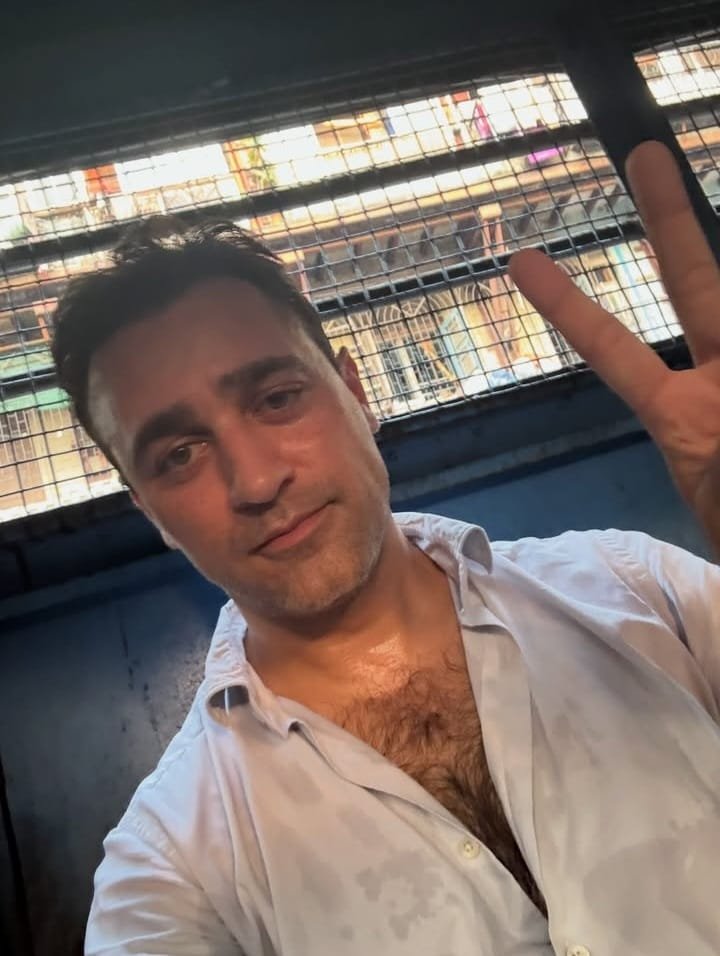
Meanwhile in Mumbai, a demonstration was organised in support of the CJP protest in Delhi under the leadership of Activist Tushar Gandhi at the August Kranti Maidaan. But even before the agitation could begun, Mumbai Police swung into action and detained all the protestors assembled at the protest site including actor Imran Khan who had come to express solidarity with the CJP.
Image Souce @ aljazeeraenglish, md_ahrar_seemanchal, collectivedelhi, pintu_sah, imrankhan