
BB Desk
New Delhi and Mumbai witnessed parallel demonstrations on Friday, October 2, as student groups, civil-society organisations, and the Cockroach Janata Party (CJP) took to the streets over concerns surrounding electoral-roll revisions and the functioning of the Election Commission.
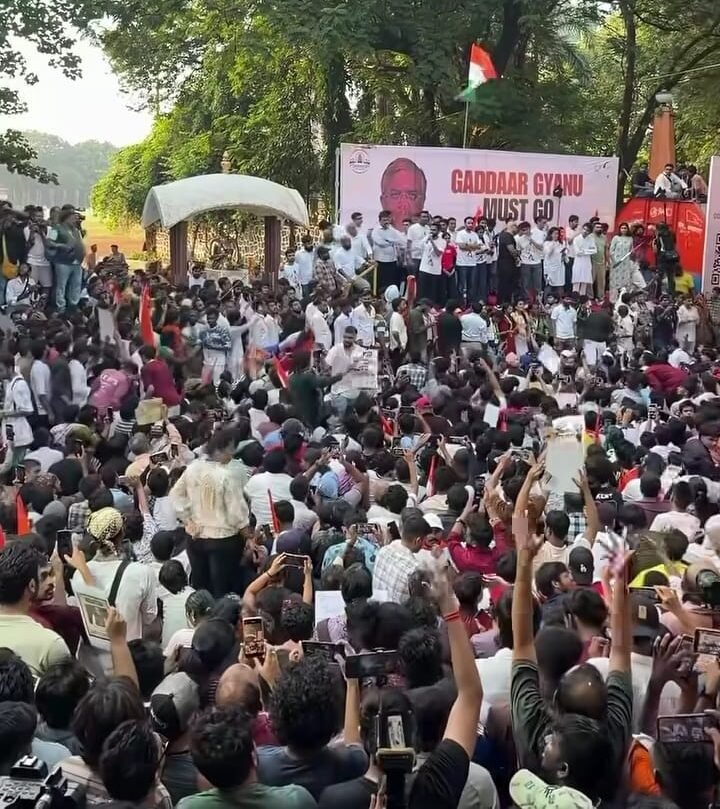
In Delhi, the proposed gathering around Jantar Mantar faced heavy restrictions. Police imposed prohibitory measures, barricaded the area, and detained more than 700 demonstrators including AISA/SFI/NSUI members, Activist Yogendra Yadav, AAP Leaders, and former Chief Minister Atishi Marlena. Several Metro stations in central Delhi remained temporarily shut amid heightened security. Protesters chanted slogans, demanding resignation of Chief Election Commissioner Gyanesh Kumar. They also raised concerns about the arbitrary way, the Special Intensive Revision (SIR) is being conducted.
Thousands of kilometres away, Mumbai emerged as another major centre of the day’s mobilisation. CJP supporters and activists began assembling around Shivaji Park for their ‘Jail Bharo Andolan’. Although Mumbai Police had denied permission for the protest, CJP leaders maintained that they would go ahead with the demonstration regardless.
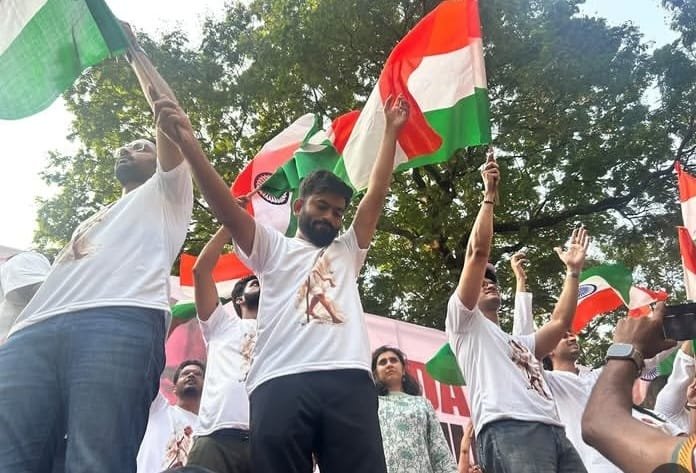
A temporary stage was erected on a truck outside Gate No. 6 of Shivaji Park, from where CJP Founder Abhijeet Dipke, Convenor Ashutosh Ranka, and Spokesperson Saurav Das addressed the gathering.
Several prominent personalities, including Shabana Azmi, Naseeruddin Shah, and music composer Vishal Dadlani, also attended the protest expressing their support for the agitation.
Speaking to the crowd, Dipke said, “This government is so incompetent that we are forced to agitate again within just two months.”
Referring to the manner in which protesters were allegedly dragged away and detained by the Delhi Police, Dipke compared the action to that of General Dyer, the British officer associated with the Jallianwala Bagh massacre. He criticised what he described as the heavy-handed treatment of protesters in Delhi.
Turning to the Mumbai Police, Dipke asked the crowd to applaud the force and exclaimed, “I salute the Mumbai Police. They have been the best and have been very cooperative.”
Dipke further claimed that, despite instructions to detain him, Mumbai Police personnel had treated him courteously. “They were ordered to detain me, but instead they offered me tea and let me go,” he said, drawing applause from the gathering.
The central issue linking the protests is the controversy over electoral-roll revisions. Critics and opposition groups have alleged that the exercise could disenfranchise eligible voters and have questioned the Election Commission’s procedures. The Election Commission however, has rejected allegations of wrongdoing, saying the revisions are intended to remove duplicate, deceased, and otherwise ineligible entries.
At Shivaji Park, the CJP has demanded the resignation of Gyanesh Kumar, a freeze on the SIR process, and greater transparency in the appointment of the Chief Election Commissioner. The organisation has also indicated that it intends to take its campaign to other cities.
The choice of October 2 and Mumbai carries additional symbolism for the CJP. The protest falls on Gandhi Jayanti that adds more weightage to the agitation even though Mumbai has a long history of major political movements and public demonstrations. The organisers have presented the gathering as part of a wider campaign centred on electoral transparency and the right to vote.
The day’s events also underline the tension between the right to demonstrate and concerns over public order. In Delhi, authorities moved to prevent the gathering from taking shape; in Mumbai, police presence was substantially increased around Shivaji Park, while local residents also voiced concerns about disruption and noise.
From the barricades of Jantar Mantar to the gathering at Shivaji Park, October 2 has become a visible flashpoint in the continuing debate over India’s electoral rolls, the Election Commission, and democratic accountability. The protesters’ allegations remain contested, with the Election Commission maintaining that its electoral-roll exercise is intended to protect the integrity of voter lists rather than undermine it.
