
BB Desk
The very mention of Dawood Ibrahim evokes memories of 1990s Bombay, when the underworld held the city in its grip. Newspapers and tabloids were dominated by stories of gang wars, robberies, kidnappings, smuggling, shootouts, extortion threats, killings, and police encounters. Over the years, Mumbai’s underworld has produced some of the most feared and notorious gangsters, including Haji Mastan, Varadarajan Mudaliar, Karim Lala, Arun Gawli, Chhota Rajan, Abu Salem, and Chhota Shakeel. Yet, among them, it was undoubtedly Dawood Ibrahim Kaskar who emerged as the most powerful and enigmatic figure, acquiring an almost larger-than-life persona.
Despite the numerous films inspired by his life and the enduring fascination surrounding him, much about the real Dawood Ibrahim remains shrouded in mystery.
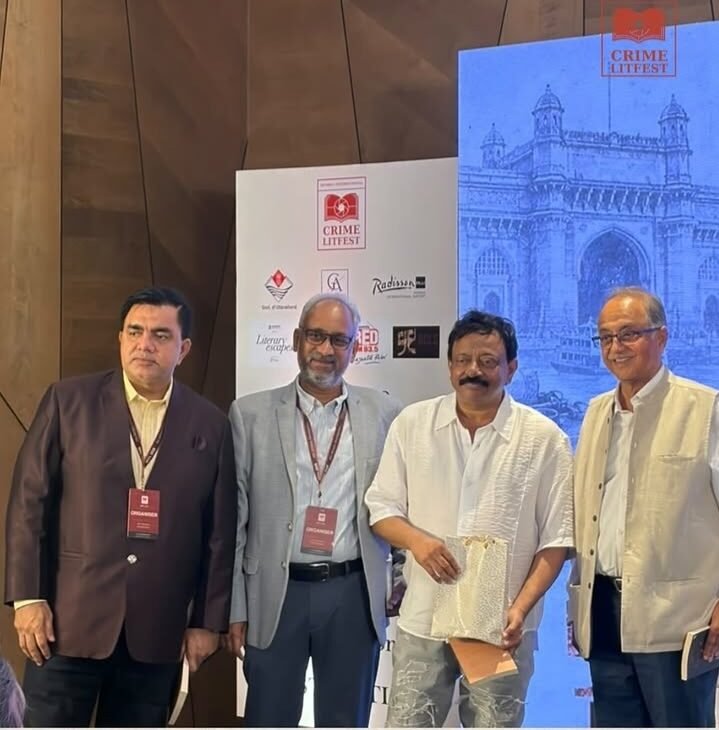
At the Mumbai International Crime Literature Fest 2026 (MICLF), audiences were offered a rare glimpse into the world of the fugitive underworld don during a riveting panel discussion titled ‘Busting the Dawood Myth’. Moderated by renowned author and former investigative journalist S. Hussain Zaidi, the session featured Neeraj Kumar, former Delhi Police Commissioner and Joint Director of the CBI, alongside filmmaker Ram Gopal Varma, best known for gritty crime dramas such as Satya and Company.
In one of the most startling revelations of the session, Kumar described Dawood’s present existence in Karachi as being far removed from the image of an all-powerful don.
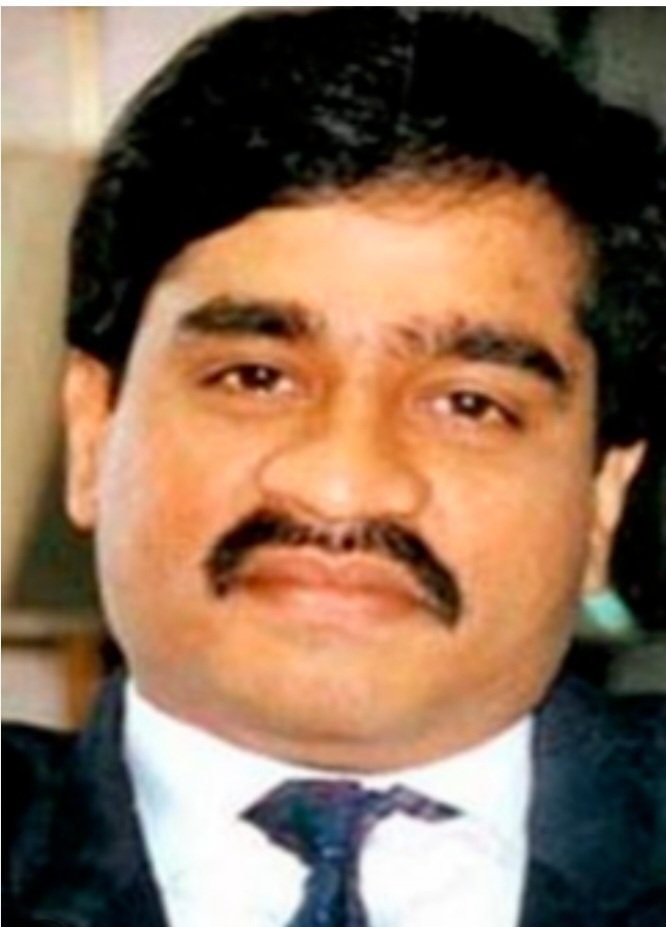
“Dawood lives like sort of a captive in Karachi under the constant surveillance of the ISI. He doesn’t even have the freedom to move about freely like you and me. He knows there are people who are out to turn him down. So, he is virtually hiding at Clifton in Karachi,” Kumar revealed while speaking to Zaidi.
The statement offered a striking contrast to the flamboyant, formidable image of Dawood that has long been portrayed in popular culture.
Kumar, who was serving as Joint Director of the CBI during the investigation into the 1993 serial blasts, went on to share fascinating insights into Dawood’s inner circle and the people who had known him closely.
“I happen to meet a lot of people who had grown up with Dawood and had seen him at close quarters. I also had the privilege of having long conversations with his close aides like Subhash Thakur, Bhai Thakur, Manish Lala, and Mohammed Abdullah of Gujarat,” he said.
Explaining the roles played by some of these associates, Kumar described Subhash Thakur as Dawood’s ‘defence minister’ and the man who headed the JJ Hospital shootout. Bhai Thakur, he said, handled the landing of silver consignments for Dawood in the Vasai-Virar belt, while Manish Lala served as his legal adviser and was instrumental in masterminding his anticipatory bail in the Carnac Bunder Bridge robbery case, following which Dawood fled to Dubai and never returned to India.
Kumar also shared an intriguing account of his conversations with Manish Lala, whom he described as a treasure trove of information about Dawood. According to Kumar, Lala had told him that Dawood might actually be willing to surrender, as he did not like the idea of constantly running away from the law. Apparently, Dawood had expressed a desire to return to India, surrender before the authorities, and clear his name.
Acting on this information, Kumar managed to speak to Dawood on three separate occasions facilitated by Lala through a secret telephone connection. The conversations, he recalled were lengthy and centred on the possibility of Dawood returning to India and surrendering.
However, the negotiations ultimately came to nothing.
“Dawood wanted to surrender, but his preconditions were impossible to meet, as he wanted to be placed under house arrest and only be tried for the Mumbai March 1993 blasts,” Kumar disclosed.
Expressing surprise that Mumbai Police had apparently never looked into Manish Lala more closely, Kumar reiterated that Lala possessed a wealth of information about Dawood’s network.
He also recalled an unexpected telephone call from Dawood in 2013, while he was investigating the IPL spot-fixing racket. The call came just 15 days before Kumar’s retirement.
“When we busted the racket, we learnt that Dawood was at the helm of it. Word went out that his name had surfaced in the investigation, and then he called me. He said, ‘Why are you still chasing me? I am about to retire now, so stop chasing me,’ and he hung up,” Kumar recounted.
As the discussion moved beyond police investigations and into the complex personality of Dawood, filmmaker Ram Gopal Varma offered another intriguing, albeit unverified perspective.
Varma revealed that one of Dawood’s associates had once told him that the don had resisted retaliating against the 1992-93 Mumbai riots, fearing that any such move could trigger widespread violence against Muslims. While Varma was quick to clarify that he could not independently verify the account, he felt that the alleged stance was consistent with Dawood’s supposedly non-fanatical and flamboyant persona, which he contrasted with that of Tiger Memon, whom he described as a deeply religious man.
The filmmaker also spoke candidly about Dawood’s significance in his own creative journey. When Zaidi pointed out that Varma’s admission that Dawood had been a source of livelihood for him might invite criticism or be misconstrued, the filmmaker offered an unapologetic explanation.
“As a crime genre maker, I get a lot of material from real-life people and events, out of which his name is on top, so obviously I had to acknowledge that. Company was based on him, but I don’t think Ajay Devgn was exactly like him in the film. A section of people call Dawood a paper tiger made by the media, while others call him the most dangerous. All of this could be true depending on their experience with him. I collect the intelligence and then arrive at a possible conclusion of what the facts could be,” Varma said.
When asked whether he would like to share a meal with Dawood if given the opportunity, Varma responded with characteristic irreverence: “He would give his right arm to dine with him, even if it meant going to jail after that.”
The candid exchange between Kumar, Varma, and Zaidi made for one of the most compelling sessions of the festival, bringing together the perspectives of a seasoned investigator who had pursued Dawood and a filmmaker who had extensively explored the Mumbai underworld through cinema. More importantly, it challenged the popular myth surrounding one of India’s most elusive fugitives, offering glimpses of a man whose real-life circumstances may be considerably different from his cinematic portrayal.
The two-day Mumbai International Crime Literature Fest, organised by Grey Media Pvt. Ltd. on November 14 and 15 at the Radisson Blu, Andheri East, brought together legendary police officers, bestselling authors, conflict reporters, screenwriters, acclaimed filmmakers and actors under one roof offering a fascinating intersection of ink, intrigue and investigation. The festival was curated by filmmaker Ankita Kumar and organised as a joint venture between S. Hussain Zaidi and senior journalist Chandramohan Puppala, the founders of Grey Media Pvt. Ltd.
