
BB Desk
In a world as vast and encrusted as the Ramayana, every detail has a story to tell. The grandeur of its kingdoms, the personalities of its characters, and the cultural identities that define them are being brought together on an unprecedented cinematic canvas in Ramayana. While the film’s teasers and trailers have offered glimpses of Ranbir Kapoor as Lord Ram, Sai Pallavi as Sita, and Yash as Ravana, another important aspect of its world-building is taking shape through an art form deeply embedded in India’s cultural history: jewellery.
Taking on the task of translating the identities of three legendary kingdoms into intricate works of craftsmanship is Tribe Amrapali, the film’s official jewellery partner. The brand’s contribution goes well beyond designing elaborate ornaments for its principal characters. It has created an extensive jewellery vocabulary spanning royal families, warriors, courtiers, attendants, supporting characters, and crowd ensembles ensuring that Ayodhya, Mithila, and Lanka each possess a distinct visual personality.
It is an undertaking that has involved more than 18 months of research, design development, and craftsmanship. Under the creative leadership of Tarang Arora and in close collaboration with the film’s creative team, Tribe Amrapali explored mythology, ancient Indian ornamentation, temple art, sculptures, and traditional jewellery forms to create designs that honour India’s artistic heritage while fitting seamlessly into the film’s cinematic universe.
The result is three contrasting design philosophies, each reflecting the cultural sensibilities, character, and spirit of the kingdom it represents.
Ayodhya: Where every ornament carries the weight of heritage
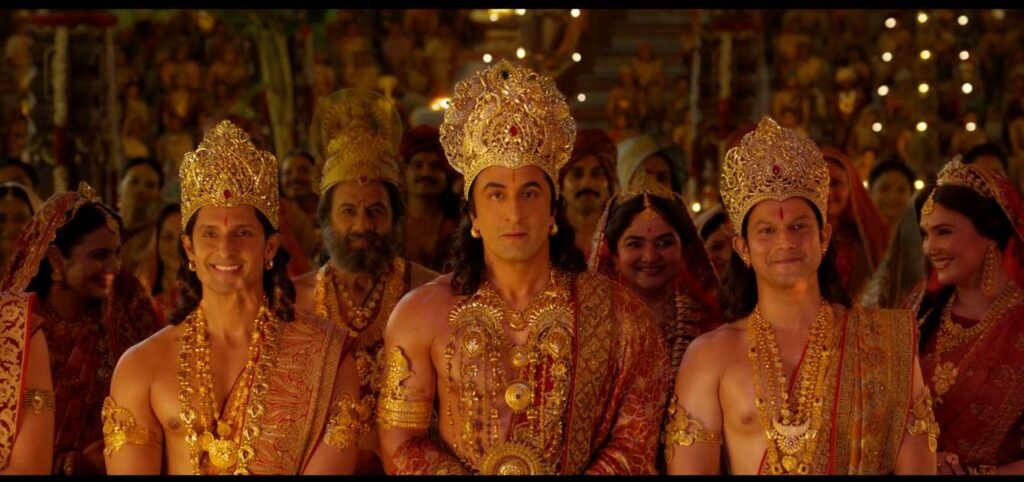
For Ayodhya, the design philosophy is rooted in royal refinement. Classical symmetry, intricate detailing, and harmonious proportions form the foundation of its jewellery reflecting the dignity and grace of a kingdom associated with righteousness, tradition, and spiritual significance.
Lord Ram’s jewellery in particular draws inspiration from the Surya or Sun motif, a reference to his Suryavanshi lineage. Circular medallions inspired by the Dharma Chakra, lotus motifs symbolising purity and divinity and finely crafted ornamental patterns come together to establish an identity that is regal without being excessive.
Here, jewellery is not simply an expression of royal stature. Each motif has a symbolic purpose adding another layer to the character’s visual representation and connecting his identity to the cultural and spiritual foundations of Ayodhya.
Mithila: A softer world told through flowers
If Ayodhya finds its expression in symmetry and regal elegance, Mithila takes a more organic route. Inspired by nature, floral artistry, and the rich traditions associated with the kingdom, its jewellery is characterised by graceful curves, delicate motifs, and thoughtfully balanced silhouettes.
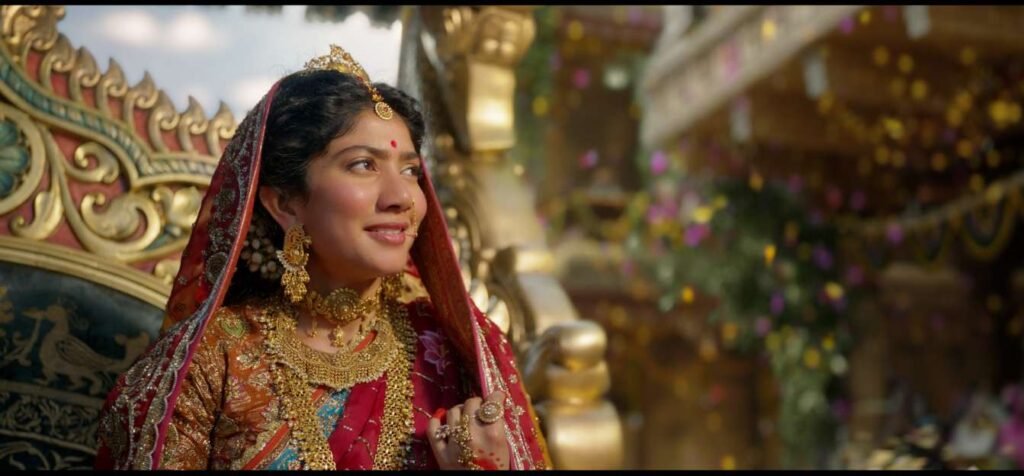
For Sita, the designs incorporate intricate floral detailing and refined craftsmanship creating an aesthetic that reflects femininity, purity, and quiet strength. Drawing inspiration from Mithila’s cultural richness and the sacred gardens associated with the epic, the jewellery brings together natural forms and traditional ornamentation.
The distinction is deliberate. Rather than relying on grandeur alone, Mithila’s jewellery establishes its identity through subtlety, elegance, and an intimate connection with nature making it visually distinct from both Ayodhya’s royal restraint and Lanka’s dramatic opulence.
Lanka: The language of power, opulence, and individuality
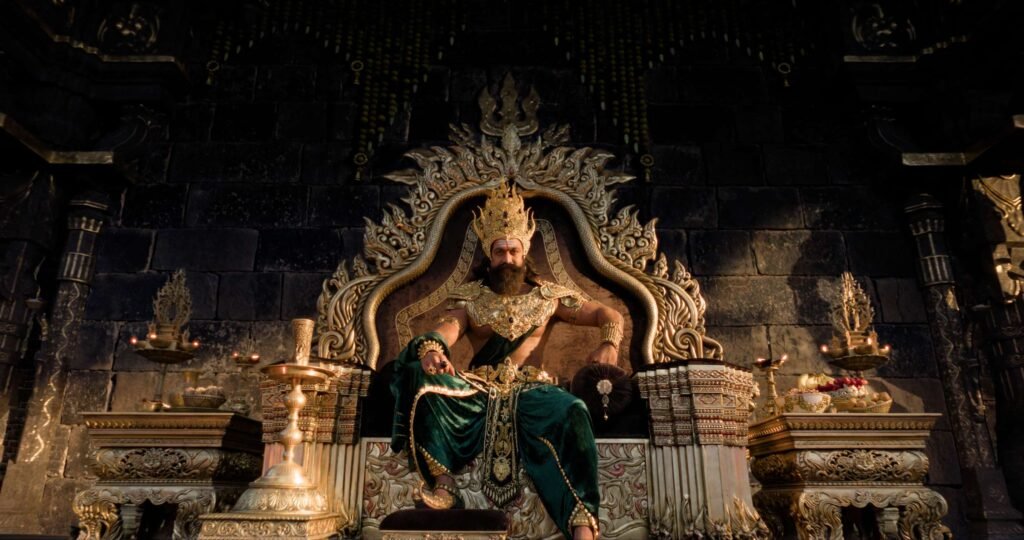
Lanka, meanwhile embraces a far more dramatic visual vocabulary. Bold silhouettes, asymmetrical compositions, angular forms, and elaborate surface detailing give its jewellery a commanding presence. Dark-hued stones and sculptural elements contribute to an aesthetic that reflects the kingdom’s power, ambition, and magnificence.
For characters such as Ravana, Kaikasi, Mareech, Shurpanakha, and Vidyutjeeva, the designs use sharper contours and stronger visual contrasts to convey intensity and authority. However, the jewellery does not reduce Lanka’s inhabitants to a single expression of power.
For Mandodari and Vibhishana, the compositions become more balanced and symmetrical, with warmer luminous stone tones reflecting wisdom, restraint, and inner strength. These distinctions ensure that the jewellery speaks not only of the kingdom but also of the individual personalities who inhabit it.
This attention to character-specific detailing is central to the larger creative exercise: building a world where even the smallest ornament contributes to the storytelling.
4,500 pieces, 18 months, and an extraordinary exercise in craftsmanship
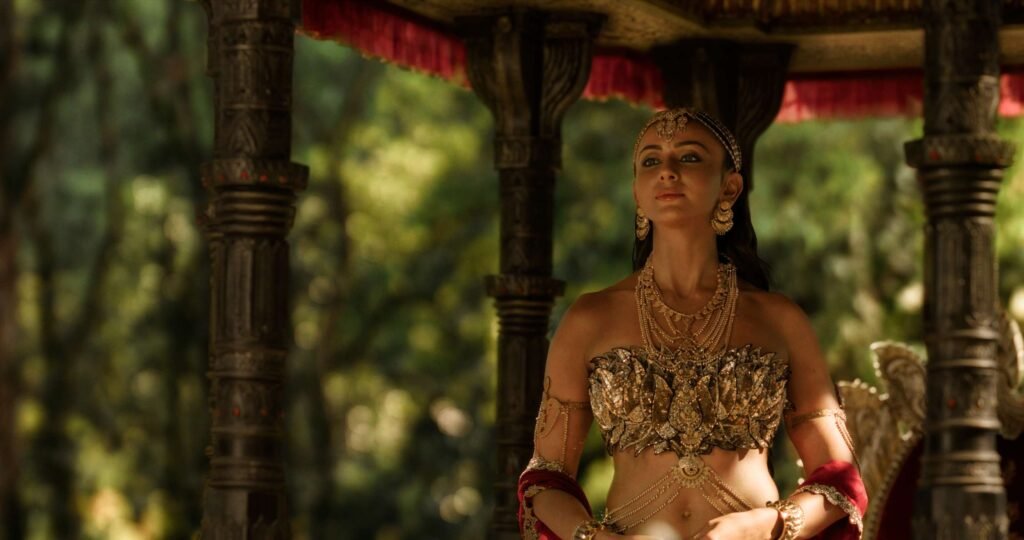
The scale of the project becomes even more striking when one considers the sheer volume of work involved. For Part 1 alone, Tribe Amrapali has created over 4,500 individual jewellery pieces, bringing together designers, master artisans, model makers, skilled craftsmen, and production teams through an extensive process of research, conceptualisation, sketching, material selection, model making, assembly, and finishing.
Each ornament has been developed with three considerations in mind: the character wearing it, the visual identity of the kingdom it belongs to, and the role it plays within the larger cinematic narrative.
Traditional metalworking techniques have been integral to achieving the desired depth and detailing. Embossed relief work, fine engraving and chasing, filigree-inspired openwork, and granulation-inspired beadwork lend the jewellery its distinctive textures. The craftsmanship extends from elaborate statement ornaments for the principal characters to accessories for supporting performers and large crowd ensembles.
Maintaining consistency across thousands of pieces while ensuring that every ornament retains its individuality is a formidable creative challenge. It also places the spotlight on the generations of Indian artisans whose knowledge and expertise form the foundation of the country’s jewellery-making traditions.
For Tarang Arora, Creative Head, House of Amrapali, the opportunity to be associated with a project of this cultural significance goes beyond scale of the production.
“When the opportunity to collaborate with Ramayana came to us, the most exciting part was simply being invited to be a part of this extraordinary journey. We all grew up with the story of the Ramayana as we knew it, but this project is reimagining that timeless epic for a new generation. It has the potential to become the Ramayana that today’s children and future audiences will connect with and remember. What makes this collaboration even more meaningful is that Ramayana is far greater than any one individual or brand. It is deeply rooted in our mythology, culture, and spirituality. To contribute, even in a small way, to something that carries such profound significance and has the power to inspire generations is truly an honour,” said Arora.
The creative process, he explains was as much about understanding the characters as it was about mastering the craft. “Designing jewellery for Ramayana has been one of our most layered and creatively enriching journeys. The challenge was not merely creating ornaments but building a complete visual vocabulary for an expansive universe of characters, each carrying a unique identity, emotion, and journey. The process involved balancing deep research with artistic interpretation, ensuring every motif, texture, and element remained meaningful while serving the cinematic vision of the film,” shared Arora.
The filmmakers share a similar understanding of the importance of these details, viewing jewellery as an integral part of character development rather than an additional layer of visual embellishment.
“Every creative decision in Ramayana has been driven by authenticity and purpose, and the jewellery by Tribe Amrapali plays a defining role in bringing that vision to life. Each ornament has been thoughtfully designed to embody the personality, heritage, and evolution of the characters, ensuring it becomes an essential part of their visual identity. More than embellishment, these pieces are woven into the storytelling, helping create a world that is both timeless and immersive,” added the makers of Ramayana.
When jewellery becomes part of the storytelling
What makes Tribe Amrapali’s involvement particularly interesting is the way it connects traditional Indian craftsmanship with the demands of large-scale contemporary filmmaking. The project draws on the country’s rich artistic vocabulary while interpreting it for an audience that will experience the epic through a global cinematic lens.
In this context, the jewellery becomes a visual storytelling device. It communicates heritage, establishes hierarchy, reveals personality, and distinguishes one cultural world from another often without the need for words.
Ayodhya’s radiant symmetry, Mithila’s floral delicacy, and Lanka’s sculptural magnificence may belong to the same epic, but they are being imagined through entirely different artistic sensibilities. Together, they create a visual language that adds depth and texture to the film’s expansive universe.
Directed by Nitesh Tiwari, Ramayana is envisioned as a two-part cinematic epic, featuring Ranbir Kapoor as Lord Ram, Sai Pallavi as Sita, Yash as Ravana, Sunny Deol as Hanuman and Ravi Dubey as Lakshman. Produced by Namit Malhotra’s Prime Focus Studios in collaboration with eight-time Oscar-winning DNEG and Yash’s Monster Mind Creations, the film is being designed for a global IMAX release.
Part 1 is scheduled to arrive in cinemas worldwide on November 5, 2026, with Part 2 slated for Diwali 2027. The films will release in Hindi, Tamil, Telugu, Kannada, and Malayalam.
As audiences prepare to revisit one of India’s most enduring epics on an extraordinary cinematic scale, Tribe Amrapali’s work offers a fascinating reminder that building a convincing world is often about the details. And sometimes, a kingdom’s identity can be told just as powerfully through the jewellery its people wear as through the stories they live.
