
BB Desk
The lines separating regional cinema from Bollywood have never been blurrier. What was once seen as a crossover experiment has now become an integral part of mainstream Indian filmmaking. Actors, directors, producers, and technicians from different industries are coming together more frequently bringing diverse talents and perspectives to stories designed to connect with audiences across the country.
Over the past few years stars like Prithviraj Sukumaran, Fahadh Faasil, Vijay Sethupathi, Yash, Nayanthara, and Rashmika Mandanna have moved effortlessly between languages and industries, proving that a powerful performance needs no linguistic barrier. The conversation is no longer about a ‘South actor entering Bollywood’ or a ‘Hindi star venturing into regional cinema’. Rather it is increasingly about finding the right actor for the right role, irrespective of where they come from.
A number of highly anticipated upcoming films are taking this approach further, with some of the most talked-about collaborations bringing together major names from Bollywood and the South.
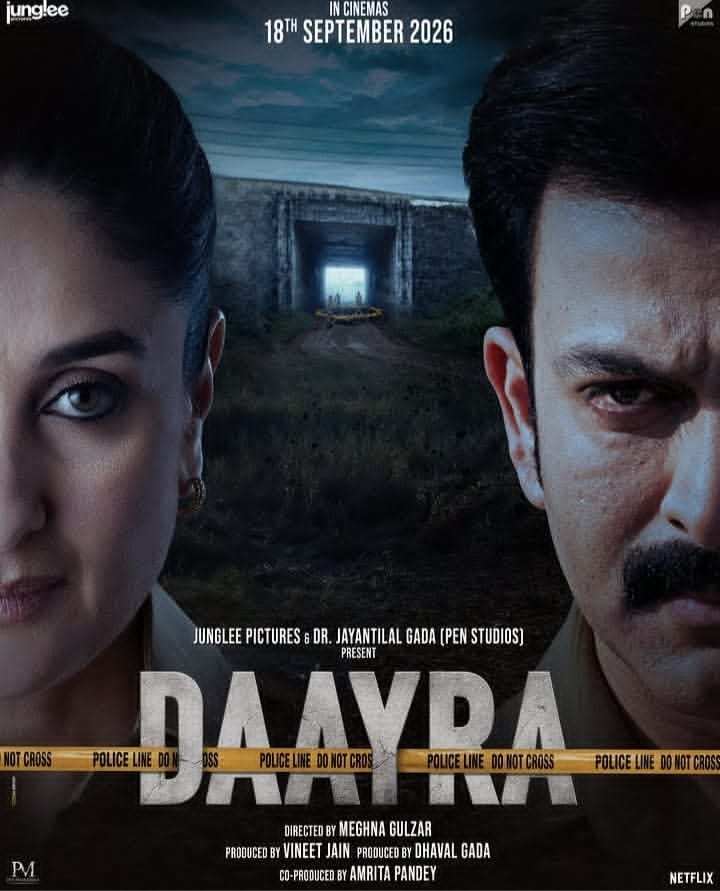
Daayra: Kareena Kapoor Khan and Prithviraj Sukumaran
Daayra brings together Kareena Kapoor Khan and Malayalam superstar Prithviraj Sukumaran for the first time, making their pairing one of the most intriguing aspects of the project. Directed by Meghna Gulzar, the crime thriller has already sparked considerable curiosity particularly because of its reportedly intense, true-event-inspired narrative.
With two performers known for their ability to bring depth and restraint to challenging roles, their first collaboration has naturally become a talking point among moviegoers.
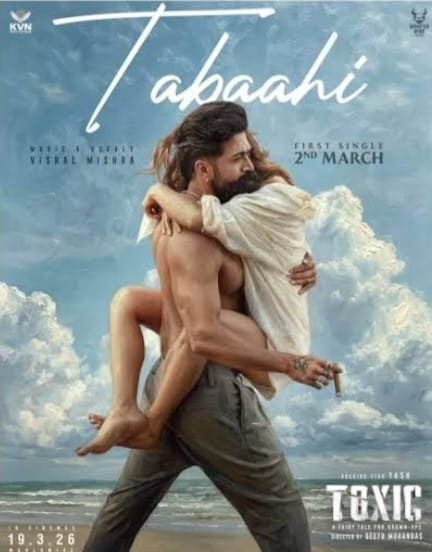
Toxic: Yash and Kiara Advani
Kannada superstar Yash and Kiara Advani headline Toxic, another high-profile collaboration that reflects the growing ambition of pan-India cinema. The film positioned as a large-scale action entertainer brings together two stars from different cinematic worlds.
More than just a casting combination, Toxic represents the changing economics and aspirations of Indian films, where language is increasingly secondary to reach, scale and the appeal of the talent involved.
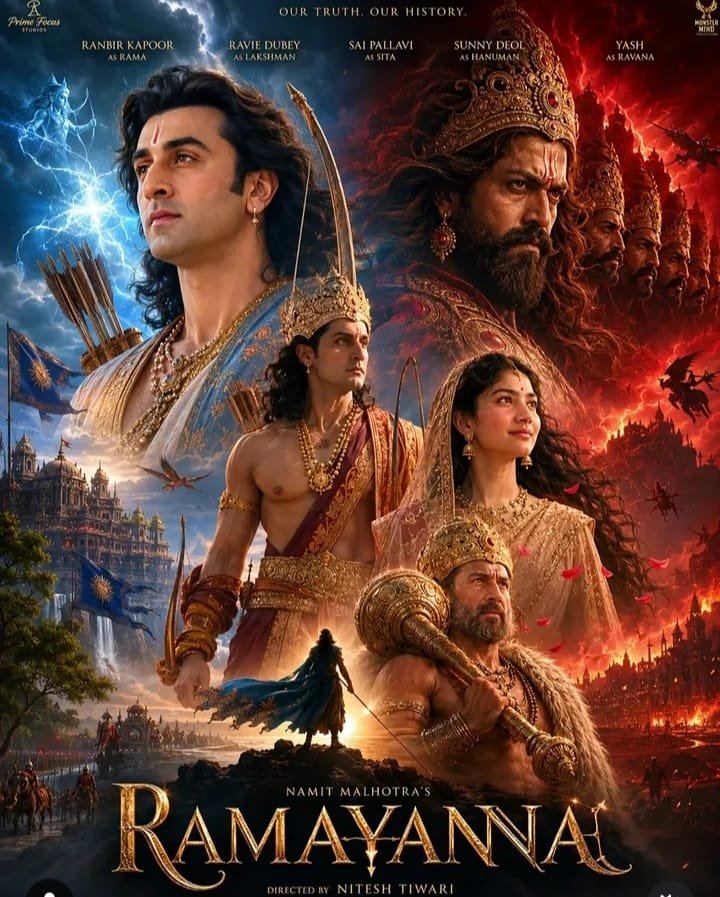
Ramayana: Part 1: Ranbir Kapoor and Sai Pallavi
Few upcoming pairings have generated as much discussion as Ranbir Kapoor and Sai Pallavi in Ramayana: Part 1. Ranbir, one of Hindi cinema’s leading stars shares the screen with Sai Pallavi, whose performances have made her one of the most celebrated names in South Indian cinema.
Their combination adds another layer of intrigue to the ambitious mythological epic, which has been among the most closely watched Indian film projects in recent years. The casting also highlights how filmmakers are increasingly looking beyond traditional industry boundaries when putting together an ensemble.

Spirit: Prabhas and Triptii Dimri
Telugu superstar Prabhas teaming up with Triptii Dimri in Spirit is yet another example of this evolving casting philosophy. The collaboration brings together two performers with very different career trajectories and screen personas, creating plenty of anticipation around their on-screen chemistry.
With Prabhas already established as one of the biggest pan-India stars and Triptii Dimri rapidly becoming one of Hindi cinema’s most talked-about performers, Spirit adds another interesting chapter to the growing exchange between industries.
Reddit is already discussing the trend
Interestingly, the excitement around these cross-industry pairings is not limited to promotional campaigns or film announcements. Discussions among moviegoers are already spilling onto Reddit, where a post about these upcoming collaborations has sparked conversation about the changing nature of Indian casting.
One commenter summed up the broader shift by writing, “Cinema is expanding, the world is getting to see good Indian cinema then why not actually cast ‘Good Actors’ be it from any industry.” Another user highlighted why such combinations increasingly feel natural arguing that “the roles simply suit the actors best,” and adding that “at the end of the day, good casting is just good casting.”
That sentiment perhaps captures the transformation taking place across Indian cinema better than anything else. Audiences are becoming increasingly comfortable watching films across languages, while streaming platforms and pan-India releases have made regional stars familiar faces nationwide.
The result is a film industry where talent is no longer confined by geography or language. From Daayra and Toxic to Ramayana: Part 1 and Spirit, these collaborations point towards a future in which Bollywood and South Indian cinema are not viewed as separate worlds but as parts of one increasingly interconnected Indian film industry.
And as filmmakers continue to prioritise the demands of the story over traditional casting boundaries, “good casting is good casting” may well become the defining philosophy of the next phase of Indian cinema.
