
BB Desk
The death of 20-year-old IIT Bombay student Sahil Ravindra Wakode has triggered protests on the Powai campus and a wider debate over student welfare, institutional accountability, and the handling of disciplinary proceedings at premier educational institutions.
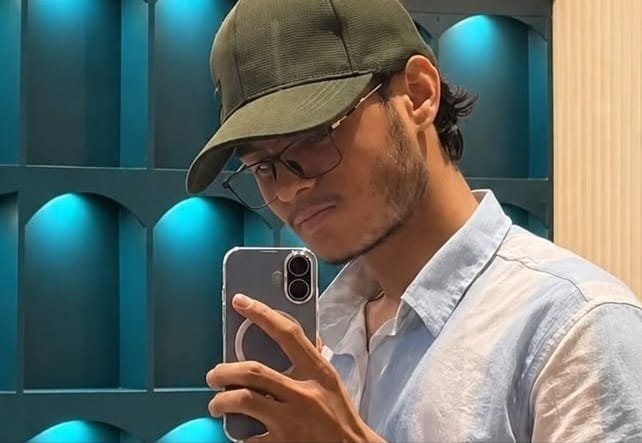
Wakode, a second-year BTech student in the Department of Energy Science and Engineering died by suicide on September 18, 2026, hours after an incident during a mid-semester examination. According to IIT Bombay’s initial account, he was found using a mobile phone during the examination and had allegedly uploaded the question paper to ChatGPT to seek answers. The institute said no disciplinary action had been taken against him and that he had been counselled by faculty members and assured that the incident would not adversely affect his academic career.
His family however had disputed aspects of the institute’s account. Wakode’s father filed a police complaint alleging harassment along with caste-based discrimination and named several people associated with the institute. The allegations include claims that the student had faced caste-related abuse and pressure in the months preceding his death. IIT Bombay has denied that caste discrimination was involved and said no complaint from Wakode regarding caste discrimination had been made to its administration or SC/ST cell.
Investigation transferred to the Crime Branch
Based on the family’s complaint, Powai Police filed a case relating to abetment of suicide invoking provisions of the Scheduled Castes and Scheduled Tribes (Prevention of Atrocities) Act and other offences. The investigation was subsequently transferred to the Mumbai Crime Branch following a standoff involving Wakode’s parents, who reportedly refused to accept his body while demanding arrests.
The FIR names Professor Suryanarayana Doolla (invigilator at the examination), along with other officials. Allegations against Doolla and others have not been established yet. No suicide note was reportedly recovered from Wakode’s hostel room.
IIT Bombay apologises and removes professor from deanship
The institute has faced mounting criticism from students over its handling of the incident. On September 21, IIT Bombay apologised for statements made earlier about the circumstances preceding Wakode’s death, saying it was inappropriate to characterise events before they had been established through an investigation.
Professor Doolla was removed from his position as Dean of Student Affairs amid the controversy though the students had demanded stronger action, including his suspension from teaching duties, rather than merely removal from the administrative position.
There has also been confusion over the position of IIT Bombay Director Professor Shireesh Kedare. While reports emerged that he had agreed to resign during discussions with protesting students, IIT Bombay subsequently clarified that he has not resigned and that reports suggesting otherwise were false.
Students put forward 18 demands
The protests have resulted in an 18-point list of demands from students, covering accountability, transparency, disciplinary procedures and student support. IIT Bombay’s director signed the charter during discussions with protesting students, although the administration has indicated that formal procedures and due process would still have to be followed.
The episode has also renewed attention on student deaths at IITs. A compilation based on RTI responses and media reports by IIT Kanpur alumnus Dheeraj Singh says at least 171 students across IITs died by suicide or through other unnatural causes between January 2006 and September 2026. The compilation is not an official government dataset, but it has added to the discussion about institutional and campus-level factors affecting students.
What Happens Next
The Crime Branch investigation is expected to analyze the sequence of events before the student’s death, including the examination incident, interactions between the student and faculty members, the allegations raised by his family and other relevant evidence.
For IIT Bombay, the case raises a difficult question that extends beyond the events of September 18: how can institutions maintain academic integrity and enforce examination rules while ensuring that students facing distress have effective avenues for support and grievance redressal?
What remains clear is that the death has left a grieving family, a shaken campus and questions that require careful answers. As the investigation moves forward, establishing the facts while ensuring dignity for the student and support for those affected will be crucial.
