
Sameena Razzaq
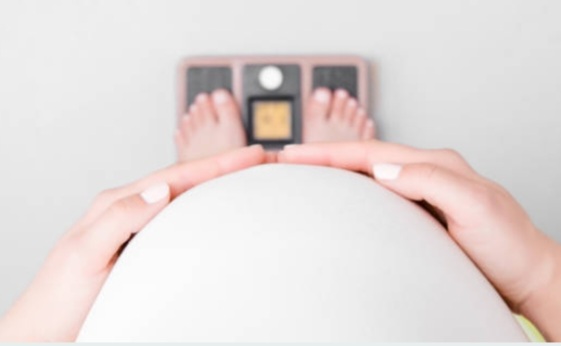
Motherhood changes a woman in ways that go far beyond what the eye can see. Yet, for countless women, one of the first things society notices after childbirth is not their strength, resilience, or sacrifice but the extra weight they carry.
“Baap re, kitni moti ho gayi hai”
“Gym kyun nahi jaati?”
“Thoda kam kar.”
Almost every woman has heard comments like these at some point in her life. Sometimes casually thrown around as ‘concern,’ sometimes disguised as humour, and largely delivered without understanding the emotional impact they leave behind. Weight struggles are deeply tied to hormonal changes, stress, lifestyle, and emotional wellbeing. For women, these changes mostly intensify during major life phases like – adolescence, pregnancy, middle age, and menopause. But perhaps the most emotionally loaded and socially scrutinised phase is the postpartum period.
After bringing a child into the world, a woman’s priorities shift entirely. Sleep becomes scarce, recovery is slow, hormones fluctuate wildly, and her body begins adapting to a completely new reality. Weight is generally the last thing on her mind. Yet society rarely allows her that grace.
From relatives to friends – and at times even spouses – women are frequently reminded of the ‘extra kilos’ they carry after pregnancy. What should ideally be a period of healing often becomes a phase of scrutiny.
Ayesha (name changed), who recently became a mother recalls how what began as harmless remarks slowly turned into emotional torment. While her husband initially brushed aside her postpartum weight gain, his attitude changed over time. Constant criticism about her body eventually pushed her towards medication and bariatric treatment in an attempt to lose weight.
Actress Patralekha also addressed postpartum body shaming, urging people to show kindness and acceptance toward natural post-pregnancy body changes. She spoke openly about how her body had naturally reacted to childbirth and pushed back against negative comments surrounding her weight gain.
For many women, such remarks hit a raw nerve.
“I had a C-section delivery and with that came scars. It is difficult accepting my body has changed permanently and may never go back to what it once was. Over time, I have realised that acceptance is part of healing. But when someone close like my mother constantly reminds me to lose weight, it inevitably creates pressure you are already silently carrying,” says Arzoo Tisekar, Analytics & Insights Lead.
Samanah Rizvi, Co-Founder, X24 Health believes much of the problem stems from lack of awareness around motherhood itself. “In my case, comments mostly came from people within the close circle. I would laugh them off outwardly, but internally they affected how I saw myself. A lot of men and even families are never really exposed to the realities of postpartum recovery or depression. Once that understanding comes in, it stops being about appearance and starts becoming about empathy and respect.”
Dr. Gahana Advani, Professor of Biochemistry at a private institute suggests the pressure often comes from society at large and not always from men. “Postpartum weight is judged far more by society’s expectations, other women, and the pressure women place on themselves than by men who truly matter. Supportive partners understand that childbirth changes a body, and no loving partner should ever damage a woman’s confidence with cruel comments.”
Air India Captain Kinnari Aggarwal insists the comparisons with celebrities often create unrealistic expectations. “Women are made to feel that losing postpartum weight is easy. What many don’t understand is that ordinary women do not have the privileges or support systems celebrities have, which allows them to focus entirely on getting back into shape.”
Bushra Rizvi, a Generation Shaper and homemaker, emphasizes society still underestimates the intensity of childbirth. “Childbirth is not a small or ordinary event. It is one of the most profound physical and emotional transformations a human body goes through. There are hormonal shifts, emotional adjustments, sleep deprivation, healing, and identity changes – none of which can or should be rushed. Thankfully, more men today are trying to educate themselves and respond with empathy, but we still have a long way to go.”
How Men Perceive Postpartum Weight Changes
For some men, the emotional transformation of parenthood outweighs physical appearance entirely.
“My wife had a C-section delivery, so there was considerable weight gain, but honestly it didn’t affect me. I was busy looking after my newborn. Our relationship has matured over time. The attraction is no longer just physical – it’s emotional now. Looking at everything she handles, it would be unfair on my part to pressure her to lose weight,” shares Zaid Lokhandwala, a Data Scientist.
Underlining how superficial expectations can clash with the realities of life and marriage, Aman Singh Co-Founder, GradRight and Founding Project Director, Ashoka University reflects, “A lot of men obsess about beautiful women, but you have to be very unwise to marry someone only because she is attractive. If someone marries only for beauty, disappointment is inevitable because the human body naturally changes after pregnancy. So, it’s unsurprising if such men have a reaction to these changes. I remember feeling immense gratitude towards my wife when she delivered our daughter. Her weight gain never really diminished her attractiveness for me.”
At the same time, others candidly admit that societal conditioning still heavily influence perceptions.
“Assuming I had a wife, then yes – as a man, if I constantly see other women who are conventionally fit and compare them to my partner who is out of shape, it may affect attraction at some level. Society can be extremely cruel and judgemental. We tend to compare what a woman looked like before pregnancy to how she looks afterward,” says Anil Merani, media professional.
Actor Gaurav Chopra highlights the issue is more layered than it appears, “I don’t think it matters to men as much as it is made out to. Men generally want their partners to be attractive in a broader sense, but I know many men who want their girlfriends/ wives to be little not perfect or size zero. In fact, they find them cuter after they become a little chubbier. I genuinely feel this pressure is often fuelled more by women than by men.”
Public Sensitivity vs Private Conversations
Is there a gap between what men say publicly and what they might privately feel about postpartum bodies?
“Very Likely” confesses Aman Singh. “I would doubt my own views on it. Are we saying certain things because we genuinely believe them, or because we want to sound better socially? On sensitive topics like this, people often project a more evolved version of themselves publicly while privately battling deep superficial instincts. It’s a normal psychological compensation behaviour as admitting there is a baser self in us is little challenging,” adds Singh.
Anil Merani is even more blunt. “Privately, conversations can become far more grotesque. There are many things people won’t say publicly, but in male groups or so-called locker-room conversations, discussions around women’s bodies can become deeply insensitive. The same happens in female social circles too.”
Why Does Postpartum Body Shaming Happen?
Majority of participants believe postpartum body shaming is rarely about a woman’s body alone – It is largely a combination of conditioning, social pressure to conform, unrealistic beauty standards, and lack of empathy.
“We grow up with certain standards in our heads about how women should look. There’s even a term like ‘trophy wife,’ where a woman’s beauty becomes a status symbol. For some men, having an attractive wife gives them a sense of achievement in society. I think that mindset is one reason some husbands pressure their wives to maintain a certain appearance,” points out Zaid Lokhandwala.
Shujaat Zariwala, an IT professional notes, “It can be a mix of conditioning, lack of awareness, and social pressure. Some people are simply insensitive and say hurtful things casually. Others intentionally put people down. At the same time, how something is said and how it is perceived can also differ.”
According to Anil Merani, “A large part of it comes from lack of empathy. Many men grow up consuming highly idealised images of women like Samantha Fox, Brooke Shields etc and unconsciously expect their partners to fit those standards forever. There’s also social pressure – having a partner who is perceived as ‘out of shape’ is not considered cool in some circles. A homemaker may face less pressure, but in corporate spaces or the entertainment industry, the expectations can be intense. Social media has also made things worse because anonymity allows people to express their harshest judgements freely.”
Gaurav Chopra broadens the conversation beyond gender. “We live in a world where people constantly judge you — for your looks, choices, success, money, clothes, even your social media posts. Society conditions us in certain ways based on upbringing, environment, and culture, and then we judge people who don’t fit those standards. There’s excessive emphasis on fitness, measurements, skin tone, and perfection because industries profit from insecurity. People think they are chasing perfection, but often they are trapped in a cycle designed by others. Whoever imposes this pressure — men, women, or businesses — it is unfair.”
Expectations vs Reality
The pressure to “bounce back” quickly after childbirth often ignores biological reality.
Dr. Niranjan Mayadeo, prominent Obstetrician and Gynaecologist, KEM Hospital explains, “There are significant hormonal changes during puberty, pregnancy, postpartum, and menopause. Weight gain during these phases is natural. With proper diet and exercise, many women can gradually return to shape within six months, but expecting drastic changes in a few weeks is unrealistic.” He also notes that medical conditions like hypothyroidism can make weight loss even more difficult and may require treatment beyond diet and exercise. He further adds that awareness and understanding may help overcome these unrealistic expectations.
More Than Just Weight
The conversation around postpartum bodies is not merely about appearance – it is about empathy, patience, and respect.
A woman’s body does not simply ‘gain weight’ after childbirth; it creates, carries, and nurtures life. Recovery is neither linear nor identical for everyone. While health and fitness remain personal choices, reducing a woman’s worth to how quickly she ‘gets her body back’ ignores the magnitude of what her body has endured.
Perhaps the real shift needed is not in women’s bodies – but in society’s expectations.

