
Sameena Razzaq
The moral quandary of deciding whether to ‘pull the plug’ or hold on to life—however fragile— weighs heavily on the human heart. It is never an easy choice—especially when it concerns a loved one suspended between life and death. The pain of such a decision is unimaginable, yet agonisingly real for families like that of Harish Rana.
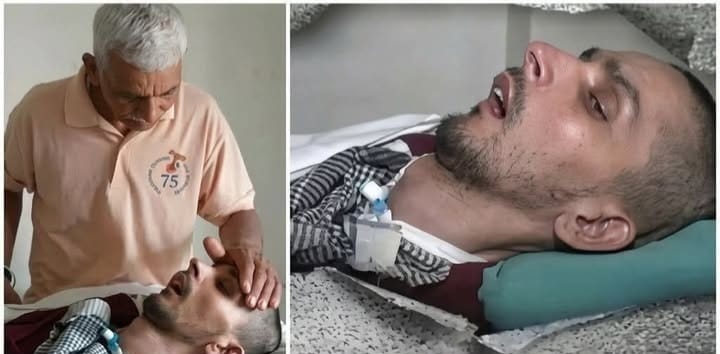
For thirteen relentless years, Rana’s elderly parents tended to him oscillating between hope and heartbreak. Their mornings would start with prayers for a miracle and evenings would end in quiet disappointment. Yet through it all, they stood by him unflinchingly.
In 2013, a tragic fall from the fourth floor of a paying guest accommodation in Chandigarh left Harish, a promising engineering student, with catastrophic brain damage and complete quadriplegia. Since the accident, he has remained in a persistent vegetative state—dependent on a tracheostomy tube for breathing and a gastrojejunostomy tube for feeding. Despite receiving care at leading hospitals, his condition has shown no medical possibility of recovery.
Still, his parents continued their efforts—exhausting all their savings and even selling their home to fund his medical care. Over the years, the Rana family has not only endured the emotional toll of watching their young son suffer but also experienced the crushing financial burden of his prolonged medical care.
With tearful resignation, Harish’s father, Ashok Rana, voiced what no parent ever wishes to say, “Our hopes are crushed as we see him sinking into silence. Emotionally and financially we are exhausted, we have nothing left. No child deserves to suffer like this and no parent deserves to watch it.”
On March 11, in what is being widely lauded as a landmark judgment, the Supreme Court of India granted permission for passive euthanasia for 32-year-old Harish Rana. The ruling allowed the withdrawal of artificial life support, offering what his family calls a “dignified end” to prolonged suffering.
The judgement has sparked widespread discussion, drawing support, reflection, and caution from various quarters.
Emphasizing the harsh realities families face, Activist and Lawyer Abha Singh says, “People in a vegetative state live in such misery, often with bed sores and other complications. Not everyone can afford treatment abroad where euthanasia is legal. Medical care today is prohibitively expensive. Families are forced to sell homes and jewellery. Without a robust social security system, the burden becomes unbearable. This is a landmark judgment—one that should have come at least a decade earlier.”
Echoing the sentiment from a legal standpoint, Supreme Court Lawyer Anand Jondhale states, “The right to life, in our view, includes the right to die. When a patient is beyond recovery and medical experts confirm that no further treatment is possible, such permissions should be granted. However, these decisions must remain under judicial scrutiny, just like other sensitive matters handled by courts.”
Describing the ruling as progressive yet cautious, Criminal Lawyer Viquar Rajguru remarks, “It is a laudable judgment. While it restricts passive euthanasia compared to earlier interpretations, it affirms the right to die with dignity. Ideally, active euthanasia could also be considered.”
For many, the issue is deeply personal.
Samanah Rizvi, Co-Founder X24 Health who cares for her ailing father, reflects on the emotional conflict such decisions bring, “Watching a parent suffer from kidney failure forces you to confront life’s fragility. My faith teaches me to preserve life, but compassion teaches me to recognize suffering. This judgment reflects the delicate balance between belief, dignity, and harsh realities faced by families.”
Kanta Advani, a Media Marketing professional, highlights another dimension of the systemic challenges, “Private hospitals often feel like profit-driven systems, and insurance companies frequently fail patients in genuine cases. The financial burden can be devastating. Above all, for parents, watching their child suffer is unbearable—they deserve closure too. I welcome the judgment.”
Yet, not everyone is without reservations. The medical fraternity remains cautiously divided as far the judgment is concerned.
Flagging the unpredictability of such cases, Dr Tushar Jagtap, Convenor Healing Hands Unity Panel Maharashtra points out, “This is an extremely complex issue. I know of cases where patients in vegetative states have recovered even after years. As doctors, we don’t give up—even when survival chances are minimal. This decision exists in theory for now; we must study its implementation in practice over time to underline its pros and cons. Like organ transplantation laws, we need a structured framework for euthanasia as well.”
Renowned Psychiatrist Dr. Harish Shetty stresses the importance of deliberation in these matters, “Even when medical experts unanimously agree that recovery is impossible, such decisions must never be rushed. There must be extensive discussion and reflection till you pull the plug or remove the life support. The real test lies in how this judgment works on the ground—unexpected challenges will arise, and the law will inevitably evolve.”
While the overall response to the judgment has been largely positive, it also opens the door to complex ethical, legal, and medical questions. The story of Harish Rana is not just about a court verdict—it is about a family’s endurance, their silent suffering, and ultimately, their search for dignity in the face of irreversible loss.
In the end, the judgment reflects a difficult truth: sometimes, letting go is not about giving up—it is about granting peace.

